Sep 28

Choosing the Location of Your Outdoor Container Garden

Location of Your Outdoor Container Garden

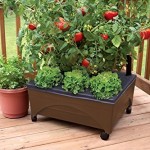
When you decide to start an outdoor container garden, the perfect location is vital. The wrong location could spell disaster for your plants. A good location means that your plants will get the right amount of sunlight. It also means protection of your plants against outside damaging influences such as weather. Your container garden must be accessible for maintenance as well.

The first concern in choosing the right spot for your garden is the amount of sunlight that your plants will get. You might have to split your garden into different sections in order to achieve this. Too much sunlight can be damaging to some plants while too little can harm others.

If you have quite a few plants that need sunlight, and another bunch that require shade, you will either have to split your container garden into two sections, or provide shade for those that need it.

This task can be very simple for a container garden. If the part of your garden that will be shaded has only a few plants, a tarp can be used. Just make a frame with the tarp as its roof over the plants that are to be shaded for most of the day. This way you do not have to break up your container garden into two parts.

Street pollution can do irreparable damage to your plants so make sure that your garden is away from the street. Passing vehicles can stir up dust that settles on the plants, and their tires can throw rocks with a lot of force which can break the pots or tear up leaves on the plants.

Always keep your container garden as close to your house as you can. There are many reasons that you should do this. It makes the garden much easier to take care of and if it is too far from the house, you might consider it too much trouble to do upkeep on it.

If you live in a rural area, you wont have to worry so much about wildlife such as deer and rabbit munching on your plants if it is close to the house either. Animals prefer avoiding the human scent so if your plants are closer to the house, they will smell your scent instead of the plants.

Another practical reason to keep your garden close to the house is inclement weather. It is much easier to move your plants indoors when bad weather comes. High winds, too much rain and hail can tear up delicate plants. If you have had a container garden in one specific spot for years, you might have insects infesting your garden. Sometimes these bugs will come back to the same spot for food year after year. Rotating the location of your garden will discourage them from coming back.

However, if you are planting very large growing plants such as corn, you need to put them in the right spot the first time. These will be too bulky and heavy to move around. Careful consideration of the location that you put your plants is very important to the success of your container garden.

Sep 27

Raised Bed Gardening For Beginners

Raised Bed Gardening For Beginners

If you want to try a different method of gardening, then you might consider raised bed gardening. This is a type of gardening in which the beds are raised above the normal level of the soil. These are typically grown inside a wooden rectangular frame. This can either be filled with untilled soil or with tilled soil from your existing garden.

There are a lot of positive aspects to gardening in this way. For one thing, you can harvest much more produce while using the same amount of space. Raised bed gardening can actually increase the amount of produce harvested by triple the amount in this space. This is because no amount of pathway is needed which gives much more space for the actual plants.

Another benefit of the raised bed gardening is the ease with which soil improvements can be made. If you live in an area which doesnt have the type of soil that you need for your plants, it is much easier to add mulch or potting soil with enriched nutrients to the existing soil.

Weeding is so much simpler with this type of gardening too. Its much easier to pluck out any weeds which start up and saves much wear and tear on the gardeners back. Any weed seeds that are in the soil will be buried too deep to ever make an appearance.

The frames for this type of gardening can be built with a bottom and placed up higher so that the elderly and handicapped can readily reach them which make maintenance much simpler. This makes it much easier for people to enjoy their garden that normally wouldnt be able to.

Mel Bartholomew made this type of gardening very popular in his book Square Foot Gardening and his TV series. The system that he developed requires 80% less space for a garden than traditional methods. Instead of the regular raised platform bed, his system divides the bed into different sections so that a wider variety of plants can be included. It uses a special weed-free soil mixture and is perfect for growing any kind of plants. No chemical pesticides are used; it uses much less watering, and needs much less seeds than a traditional garden. With his system, actual produce yields are much higher than with the normal garden.

This system transforms each square foot into a grid. This depends on the size of plants that you wish to grow. It would take one entire square foot to grow plants as large as cabbage or broccoli so this section would be left undivided. For smaller plants, such as radishes, a square foot could be divided into sixteen different sections, each section containing a single radish plant.

There have be numerous variations of this system but they are all just copies. However, all have given Mel Bartholomew credit as being their inspiration. The raised bed gardening system is truly wonderful for those who have limited space yet still want a decently productive garden.

Sep 26

Edible Landscape Plants Which Have Edible Flowers

Edible Landscape Plants Which Have Edible Flowers

It is common for people to plant flowers just for their looks alone. What most people dont know is that some plants have edible flowers. These are usually placed in what is called an edible landscape. Flowers can really perk up a salad with beautiful color and wonderful taste. You can also use these flowers for decorating cakes and other dishes as well.

Anyone who is familiar with herbology knows that flowers can be used to make teas, and the flavor extracts can be used as flavoring for candies, cakes, frostings, and other foods. Some flowers are actually quite good for your health. Roses, for example, have a very high Vitamin C content especially the rose hips.

Nasturtiums and marigolds also have a good bit of Vitamin C as well. Dandelions are famous for their Vitamin A and C content. Usually, if a flower isnt toxic, then it is technically edible but it might taste horrible. This means you should use caution when choosing edible landscape plants. Some edible plants have lethal look-alikes. If you have allergies, such as hay fever, you should never try to eat flowers.

Make sure before you eat any kind of flower to make sure that it has not been treated with any kind of pesticide. And be very sure to only choose fresh blooms instead of wilted ones. Only eat edible flowers in small amounts.

Some people experience mild side effects if they eat large amounts of edible flowers. Never eat a flower that you know nothing about and some flowers should NEVER be eating. Lily-of-the Valley blooms are deadly. Other flowers to avoid eating are hydrangeas, azaleas, daffodils, wisteria, lupines, hyacinths, castor beans, rhododendrons, sweet peas, clematis, bleeding hearts, oleander, and calla lilies. This is only a partial list of toxic flowers.

Always do research before consuming any sort of flower. You also need to check the varieties of flowers as well. This is why, for edible landscaping uses, you should concentrate on perennials. Below you will find the best edible plants to use for landscaping.

Dianthus- comes in beautiful shades of pink, red and white. It taste is close to that of cloves.

Daylilies- has a variety of colors and tastes like squash or asparagus.

Red Clover-the flowers are a delicate red or pink. Tastes light and sweet.

Tulips- the brightly colored flowers have a mildly sweet taste.

Violets- flowers have a sweet, sour taste. Flowers are purple, blue, white and pink.

Chives-blossoms are in pink globes. Chives are sometimes used as a substitute for onions.

Bee Balm-the flowers of this beautiful plant are pink, red, white and lavender. These flowers taste a little like tea.

Hollyhocks-the flowers are beautiful to look at with their bright colors, but have a bitter taste.

Borage-flowers have a cucumber taste and are blue, lavender and purple.

The good thing about perennials is that you dont have to plant them over and over each year because they come back on their own. So enjoy these edible additions to your edible landscape.

Sep 25

Rock Gardening For Beginners

Rock Gardening For Beginners

There are a wide variety of gardens which you can design that make your yard extremely nice looking in your neighborhood. These can make you the envy of your neighbors. Rock gardens can complement a nice manicured lawn and will greatly improve your yards appearance in any subdivision or neighborhood. This is one of the simplest of gardens to take care of and even if you have yards nearby which are shabby looking, your yard will look fantastic.

This type of garden focuses on rocks of different sizes and colors with a few plants placed in the center which one would normally see in rocky areas. These plants are usually small and innocuous but help to give color to the garden which would otherwise look bland.
Because these plants are indigenous to rocky areas, these plants will be small and although the soil will thus be kept much drier, it will still require a little moisture to survive. One of the more popular styles of rock garden is where the bedrock is arranged to give the impression of a bedding plane that has shifted naturally over time or had partially been lifted above ground from the ground shifting.

When this type of garden is constructed, plants are placed in between where the stones meet unlike the natural setting which would run in a continuous line flow of rock. In Victorian times, this type of garden, or rockery as they were also called, was extremely popular.
The Japanese version of this type of garden, commonly called a Zen garden, is basically a sand box which contain sand, rocks and sometimes grass. The sand is a visual representation of water and rakes are used to ridge the sand which represents ripples in the water.
In these gardens, the rocks are representative of islands. Although not the original intention, these gardens are said to be very soothing to the mind and conductive to meditation. Knowing how to construct a garden for your particular terrain brings out the beauty of your landscape.

No matter what type of soil you have or the amount of space that you have without rocks, it doesnt mean that having a garden will help your landscape. If your land is perfectly flat, rocks can be imported for a rock garden. If you want your rock garden to look as natural as possible, observe what types of rocks are common in your area before you start moving in a great amount of rocks. When you start looking at plants to add to this garden, consider using local plants. This will give your garden a much more natural look.

Investing a little extra time and work into your rock garden will garner a lot of compliments from your neighbors and your yard will be the star attraction of your neighborhood. And since a rock garden is not deep as other gardens are, it requires very little upkeep other than a small amount of watering.

Sep 24

How to Create a Raised Bed Garden

How to Create a Raised Bed Garden

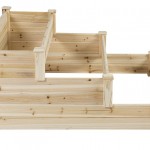
When you decide to start a raised bed garden, choosing the right size is the first step. The ideal size should be no wider than 4ft. so that you can reach the plants easier, but the length is strictly up to your own needs. The 4X4 plan is the most popular, but it is a personal preference what size you make it.

Use standard lumber for your construction of the frame. For shallow root vegetables such as radishes, lettuce, and spinach a simple frame made from 2X6 lumber will do. 2X12 boards will be needed if you choose to grow larger vegetables such as corn or tomatoes so that the soil can be built up to at least 10in. deep.

Whether or not to use treated lumber when you build your garden frame has been a source of controversy. Untreated lumber will rot in a short span of time, and you will have to rebuild your garden in a couple of years. However, using treated lumber for your raised bed garden frame is not a good idea since it could bleed chemicals into the soil. These could be absorbed by the plants and ingested by you.
The safest way to go would be to use untreated wood. Treated wood is much more convenient though so the choice is up to you. Research has found that whatever chemicals would leak into the soil would be a very small amount and harmless.

To make things easier, you should buy your lumber precut. The ends should be even to prevent soil from leaking out once the frame is put together. This would be very hard to do unless you own a large saw. A circular saw or handsaw would be the correct tools to do this job.
3 four inch ribbed deck nails will be needed for each corner of your frame. Other types of nails are not strong enough to make sure that your frame will stay together for any period of time. The weight of the soil and the plants together will push the boards apart if smaller or weaker nails are used.

The frame should be built on a level and dry surface. The frame will turn out much sturdier if you put it together on a deck or driveway. You might need some help moving the frame once it is finished as it will be quite heavy. Leave a minimum of two feet, preferably three, in between the boxes so that you can maneuver around them. Be sure that you have chosen a good spot because once these are set and filled with soil, it is impossible to move them.

You will only need six to twelve inches of the best possible soil for your raised bed garden. If needed, the plant roots will push through to the soil beneath. Make sure that the soil you fill the bottom with contains as much nutrients as possible. This will prevent your plants from having to shoot their roots into the ground beneath.

Sep 23

An Introduction to Edible Landscapes

An Introduction to Edible Landscapes

Due to the rising costs of store bought vegetables and herbs, more and more people are choosing to create natural looking edible landscapes, which means that the landscapes have plants that can be eaten. Do not think that these are ugly landscapes as many vegetables produce very pleasing flowers, and there are a lot of edible plants which are decorative. So, if done properly, these edible landscapes can be breathtaking.

Perennials vegetables are the usual choice for this type of landscaping, because they come back each year without having to replant them. As long as they are properly taken care of, they will provide both beauty and food for many years to come.

These plants are extremely easy to maintain, with just a little watering, fertilizing, pruning and insect control, they will provide many meals. There are plenty of types of vegetables that will help you to keep food on your table for a very long time and there is quite a difference in the taste of fresh vegetables from the ones that are store bought. This type of edible landscaping has been growing in popularity for quite some time now, especially with vegetable prices soaring.

You might want something easier to maintain than a traditional garden. They have be continuously raked, hoed, weeded, sprayed, watered and fertilized. Edible landscapes do not require this much work.

You can use a wide variety of plants to substitute for those in other types of landscaping. This can include using fruit trees instead of just regular shade trees. There are also quite a bit of variety of herbs which can be used to replace regular bushes and ground cover. Flowering ornamental vegetables can be used for borders, regular flowers, or other accenting plants.

In edible landscaping, regular plants and edible plants can be mixed to make beautiful displays. Some of the edible plants, mostly herbs, make a great addition to a flower bed. Many different plants, when put together, make a beautiful garden even more awesome. You can look in garden magazines or plant catalogs to see how certain edible plants will look when they are fully grown. This will help you to plan your edible landscape.

When planted in a mixture of different kinds of plants, curly parsley is very beautiful. Plant it along with pansies, lobelia, strawberries, dusty miller, or dianthus. Sage and oregano are both very beautiful herb plants that also make a functional low shrub. They look really good as front edging for larger bushes.

Wonderful for salads and sandwiches, leaf lettuces also make perfect accent areas when planted in beds. Plant a bed of different color and varieties of lettuce for a real visual treat, and then edge it with border grass. Several types of these lettuces also have tasty edible flowers.

Some of these plants for your edible landscape also have other parts that you can eat. They can look very eye catching as part of the landscape when they are blooming. Sugar snap peas have very attractive white, pink and purple flowers. The peas are very delicious too.

Sep 22

How to Choose Plants for Your Container Garden

How to Choose Plants for Your Container Garden

Most people think that a container garden is strictly for edible plants and have never considered putting flowering plants or house plants in containers. Although it is classified differently, it is basically the same thing. There are a wide variety of vegetables and herbs which can be grown in a container garden and even a few fruits as well.

Herbs are the main type of edible plants which are grown in containers. This is because of their hardiness. Vegetables are number two on the list of plants chosen for growing in containers. Fruits arent usually grown in containers because most people think it would be very hard to grow them in this manner.

However, strawberries are grown with extreme ease in containers of all types. Strawberries are a very hardy fruit and can even be grown in grow bags which can be hung from outside walls. This is a very pleasing sight for visitors to see when they come to visit. They are also a nice addition to the outdoor container garden with their bright red fruit.

Dwarf fruit trees are very easy to grow in larger pots. If kept well-pruned, they grow very nicely in larger pots as long as they receive the right amount of sunlight. Some of these also make nice indoor plants as well. The dwarf berry bushes grow well in containers, although they are very hard to move because of their weight. Dwarf blueberries and raspberries are also easy to grow in containers and give off a colorful display in your garden.

Most popular to be grown in containers are herbs. Parsley is one of the most common herbs to be grown in containers. Basil and chives are also very popular for container gardening. Almost any herb can be grown successfully in containers.

The secret to growing herbs in containers is finding a large enough container for what you are growing. Most herbs only need a relatively small container. Chives, parsley and basil can be grown easily in small pots.

Sage, however, gets to be pretty large since it is a bush. This requires a much bigger pot. Oregano gets to be a pretty large plant as well and it too will need a bigger container. Although it is actually a fruit, tomatoes remain the most popular for container gardens.

In fact, tomatoes are grown heavily by container gardeners. This is not only because quality tomatoes are hard to find but have you checked the prices in the stores lately for tomatoes? The quality of store bought tomatoes is low because they are picked green and then artificially ripened when they get to the store. This way they survive the often bruising and brutal trip to the market. They also have a longer shelf life this way as well.

Most vegetables are easy to grow in containers if you take proper care of them. These are usually started from seed and then transplanted to larger pots later on. If you start your plants indoors, they will do well but can be damaged when you thin them out. A lot of people prefer starting them from seeds so that they can observe the complete life cycle and it is satisfying when you see those first leaves start to peek through the soil. This concludes this article on choosing plants for your container garden.

Sep 21

Which Plants Do You Want For Your Raised Bed Garden

Which Plants Do You Want For Your Raised Bed Garden

When you are looking at plants for your raised bed garden, your growing zone plays an important role in the choice. How much sun your garden gets as well as your own personal preferences also determine which plants you will want in your garden? But this article will focus more on vegetables, in general, that you can choose for your raised bed garden.

You will first want to choose the vegetables that are your familys favorites. You dont want to plant vegetables that will be wasted. Many people want a garden but either do not have the room or the time to take care of them so growing some for friends would be nice as well.

Some of the easiest plants to rise in a raised bed garden are beans, Swiss chard, corn, cucumbers, lettuce, tomatoes, squash, and radishes. These all thrive in this type of garden and are perfect for the novice gardener. Herbs are also very easy to grow. These are the easiest types of plants to start out with.

If you are in a hurry to grow plants that you can harvest quickly, there are varieties which mature much quicker. Some of us are impatient and want to see plants that bear results much faster. So for a faster harvest time, you should plant spinach, lettuce, beans, beets, squash, cucumbers, carrots, and peas.

If planting early in the growing season is your preference, choose plants which are better grown outdoors. Some vegetable varieties that can be started a month or two before the last frost are broccoli, cabbage, cauliflower, lettuce, parsley, peas and spinach.

Beets, Swiss chard, carrots and radishes can all be planted up to four weeks before the very last frost. On the date of the last frost, you can go ahead and plant beans, corn, summer squash, and tomatoes. Two weeks after the last frost, start planting cucumbers, eggplant, peppers, and winter squash.

In order to extend your planting as late into the growing season as possible, choose your fall vegetables wisely. Beans, Swiss chard, corn, cucumbers, eggplants, squash, and tomatoes can be harvested right up until the last frost.

Plant these vegetables before the last frost: broccoli, cabbage, cauliflower, beets, carrots, lettuce, and spinach. These will mature quickly and can be harvested before the frost hits. In quite a few areas, you can plant lettuce and radishes before the first frost.

However, the novice gardener should probably stick to the plants which do well during the regular growing season. Leave the more complex growing for when you have more growing experience. You dont want to make a mistake your first time growing vegetables or you will get discouraged. Let your first raised bed garden be a positive experience for you and your family.

Sep 20

What Size Containers You Should Choose For Your Container Garden

Choose For Your Container Garden

When you are looking for the size of container your plants will go in for your container garden, choose according to the type of plant that will go in it because this is vital for it to grow successfully. If the pot that you choose is too small, the growth of your plant will be stunted. Although the size of the pot is very important, the material that it is made of is critical as well. This is because not all materials work well in certain areas of your container garden.

If you are thinking about adding a perennial, such as herb bushes, a large wooden container works best. Place these where they are easily seen in your yard. These wooden tub containers are the most expensive of plant containers, but wood is perfect for growing plants that will continue to grow for a year. They are also very good for plants that are going to be placed in a conspicuous location.

Wooden containers are best for the larger plants, such as wisteria, that will be in very visible plants in your container garden. Although they are a bit expensive, they last for a very long time. Be sure to get one that is treated on the outside but not on the inside. Treatments on the inside will bleed harmful chemicals into the soil that you use and will poison the plant. This is especially dangerous if you are growing vegetables tin your container garden that you plan to eat.

One of the most popular containers for a container garden is the plastic pot. This is mainly because these pots are much cheaper. But that doesnt mean that they are better containers. If you are only planning trying out this type of garden for one growing season, then plastic pots are the way to go. But if you are going to be doing this year after year, the something more durable would be practical.

Remember, although they look like they will last forever, plastic pots will warp and crack over time if left outdoors. Cracked pots are useless. They leak precious water and soil. These will eventually split and you will lose everything.

The second cheapest type of container is the terra cotta planter pot. However, you need to be careful with these because they do break quite easily. If you live in an area which experiences hard freezes during winter, you might want to choose a different type of container because terra cotta does not hold up very well in freezing weather if they are outdoors.

Fired ceramic pots are delicate but beautiful with many painted designs. These are pretty durable containers if taken care of. Normally you will find these with a glazed outside so that they appear shiny but are left unglazed inside. This is perfect since glaze can damage your plants if it gets into the soil.

What is even cheaper is making your own containers for your container garden from things around the house or yard. Most plastic containers are fine if they are a large enough size for what you intending on growing in it. Just remember to cut holes in the bottom for drainage.

Sep 19

How to Plan Your Edible Landscape

How to Plan Your Edible Landscape

First, you need to know what an edible landscape is. It is planting plants that you can eat in a landscape manner. There are a couple of advantages to this type of landscaping. First, edible landscapes save a lot of gardening space. This is mainly because they combine landscaping and food gardening. This is why it is called an edible landscape.

Second, they turn an ordinary, but pretty, landscape into a valuable food source. And the new landscape doesnt have to totally edible either. You can use whatever percentage of your garden that you wish to be edible.
You can range the percentage from 100% edible to just one fruit tree. The method of edible landscaping has been around for many centuries. Not only was this type of gardening used in ancient Persia but also in medieval gardens as well.

In some areas, the total garden is made up of only edible plants. Some people think that it is a waste of time to plant anything that you cannot eat. They see everything else, such as flowers, a waste of valuable food growing space. Knowing which types of planting conditions are favorable for the types of edible plants that you want is very important. Some will need full sun and some will need more of a shady area. The proper soil conditions are necessary for plants to survive.

But just as important as soil conditions are the amount of sun that the plants will get as well as the nutrient and PH balance of the soil. Making sketches of your garden first will help you as well as buying a soil testing kit.
Mark off where you want to place certain plants. This is much easier to do if you mark them on your sketch first. Fruit trees do better in shady areas. Since hazelnuts and currents are deciduous, you might want to put them in a special area. You can place herbs where you would normally put shrubs and ground cover.

If you choose ornamental plants, then you can pretty well put them wherever you want since they dont require a lot of care. However, edible plants do require more attention if you want to reap a nice size harvest when the time comes. This might require more watering and fertilizing.

Since edible plants to tend to draw more insects than ornamental plants you might have to find a non-toxic way of controlling these pests. However, the amount of food that you will have from these plants makes a little extra work worth it.

One of the most necessary types of edible plants to have are fruit trees or bushes. Blueberry bushes do look very attractive in front of a house and apple trees make some of the best shade. With a little practical planning, your edible landscape can look great.

Older posts «